Carbon: Streamlining Business for Hands-On Service Providers
A UX Case Study on AI-Driven Call Management
Project Overview
Carbon is a mobile IVR (Interactive Voice Response) solution designed for solo entrepreneurs whose hands are their livelihood. By automating call transcripts, scheduling, and appointment updates, Carbon ensures that busy professionals never have to choose between finishing a job and booking the next one.
Key Metrics/Quick Facts
Role: UX/UI Design & Strategy • Platform: iOS
Focus: Hands-free Workflow • Tool: Figma • Timeline: 8 Weeks
The Problem: The Cost of a Missed Call
The "Busy Hands" Dilemma
For solo service providers—barbers, hairdresser, and technicians—the phone is a double-edged sword. Every ring represents a potential booking, but answering it requires stopping work, removing gloves, or interrupting a paying client.
Key Pain Points
Revenue Leakage: 60% of callers do not leave a voicemail and won't call back if the first attempt goes unanswered.
Cognitive Load: Manually tracking rescheduled appointments while mid-task leads to scheduling errors.
Lack of Context: Standard voicemails often lack the specific details (dispositions) needed to prioritize the next steps.
Reframing the Problem
To solve the "Busy Hands" dilemma, I focused on two core questions:
HMW #1: How might we make it easier for micro and small service-based business owners to manage client appointments without interrupting active work?
HMW #2: How might we leverage automation to handle reminders and confirmations without adding cognitive load?
The Solution: Architecting an AI Receptionist
From Interception to Action
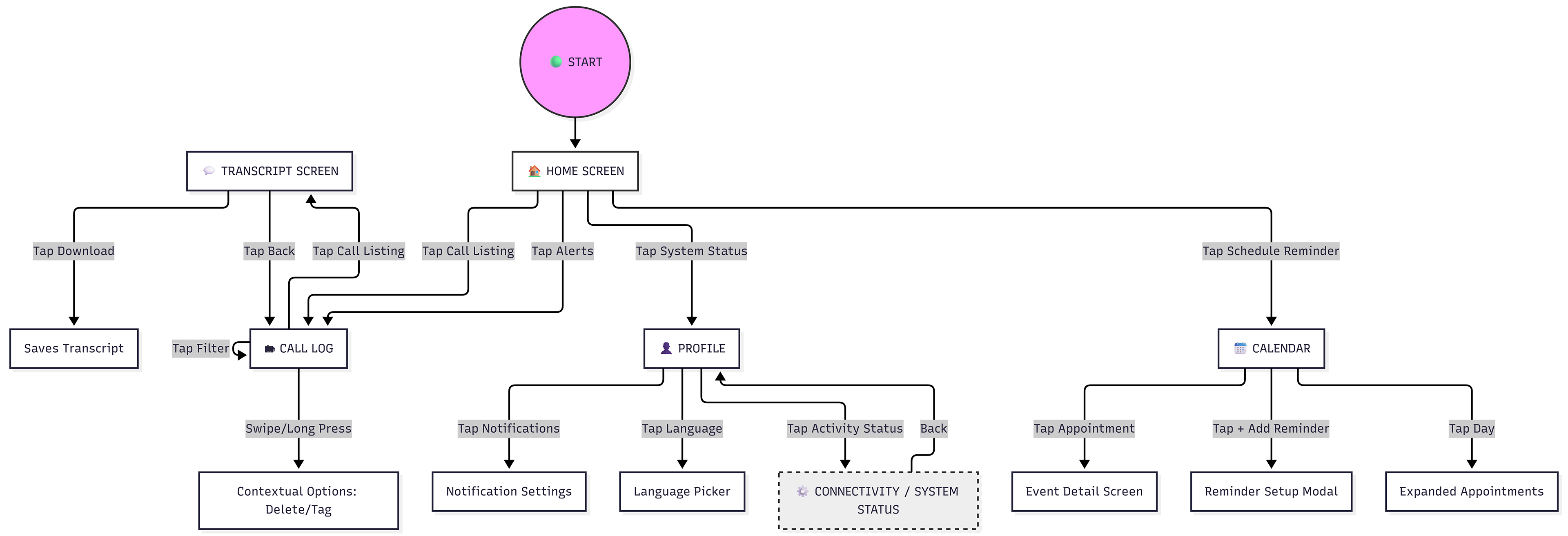
I designed a seamless logic flow that intercepts calls and uses a custom decision tree (dispositions) to categorize user needs before they ever hit the dashboard.
The solution required more than just a call log. I developed Carbon to act as a digital gatekeeper. By utilizing IVR technology, the app filters inquiries, automates the booking logic, and presents the business owner with a "ready-to-act" transcript.
Ideation & Conceptualization
I began by sketching the core interactions to visualize how a service provider would navigate the app with minimal touchpoints. These rough concepts laid the foundation for the final system architecture.
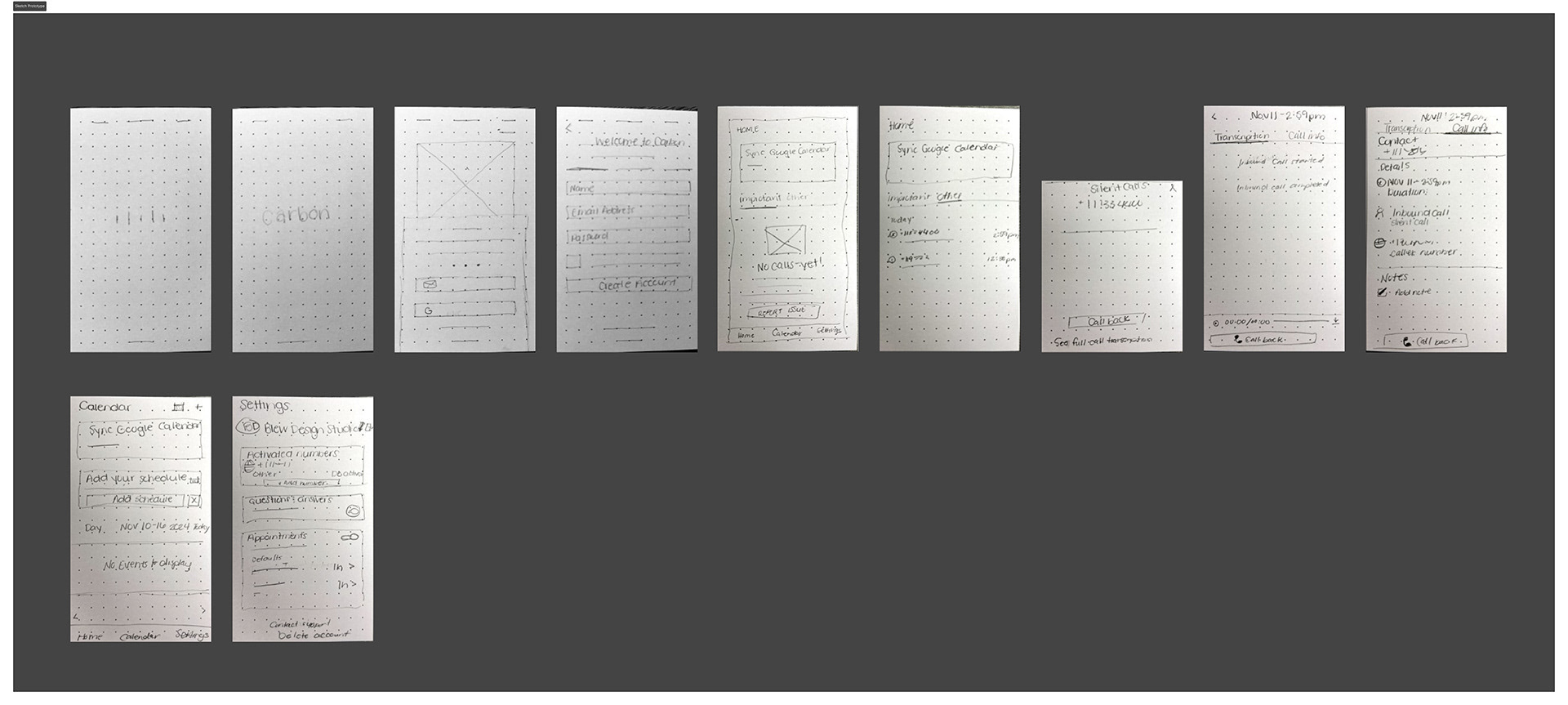
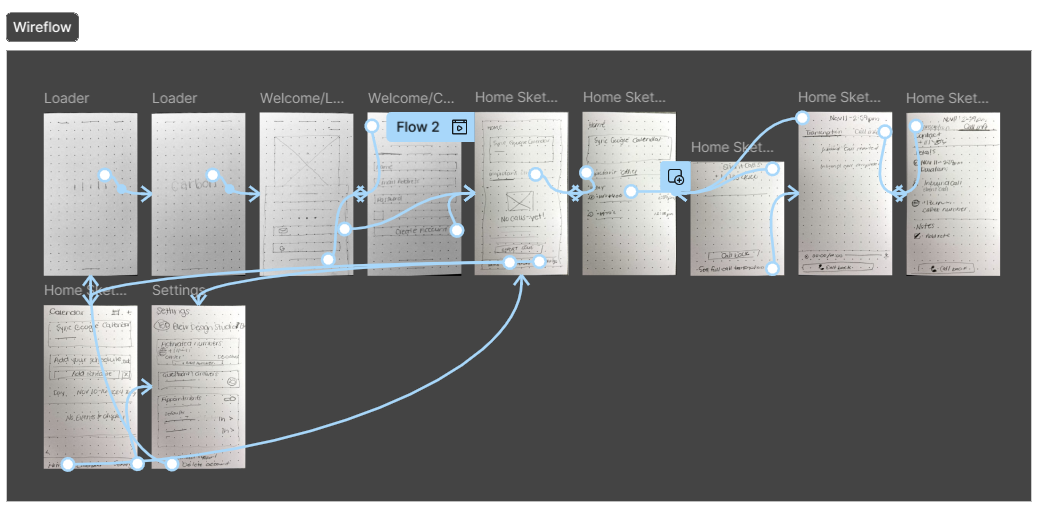
From Sketch to System: Translating initial conceptual drawings into a comprehensive digital architecture.
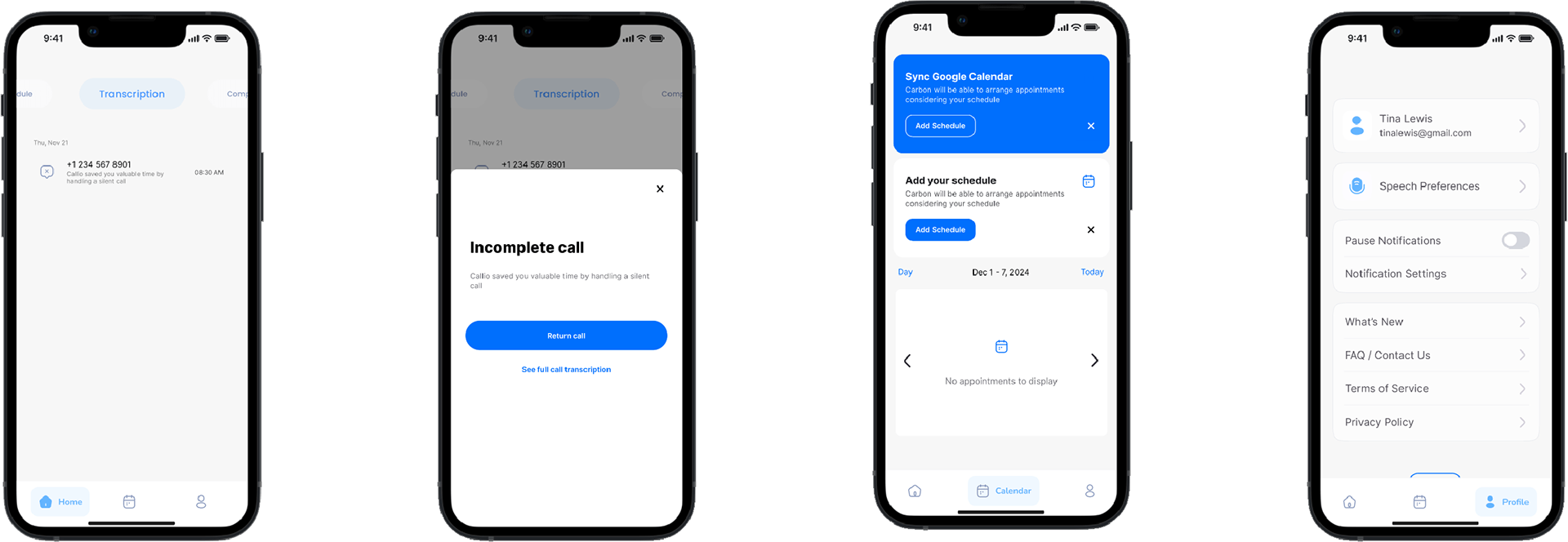
An early prototype explored a denser, utility-first layout. Through usability testing and iteration, the design evolved into a more glanceable, card-based system better suited for in-between-task usage.
Validation & User Testing
Phase 1: Concept Testing (The Idea)
I presented my initial hand-drawn sketches to two service professionals to validate the 'AI Interception' concept.
The goal: To see if they trusted an AI to handle their calls.
The Result: Users were excited about the time saved but worried about 'missing the human touch,' which led me to add the 'Call Summary' feature to keep them in the loop.
Validation & User Testing
Phase 2: Validation & Iteration (The Prototype)
Early interaction testing revealed moments of cognitive overload when users attempted to take action directly from call transcripts.
Mid-phase refinements simplified the visual hierarchy, clarifying primary actions and reducing competing elements.
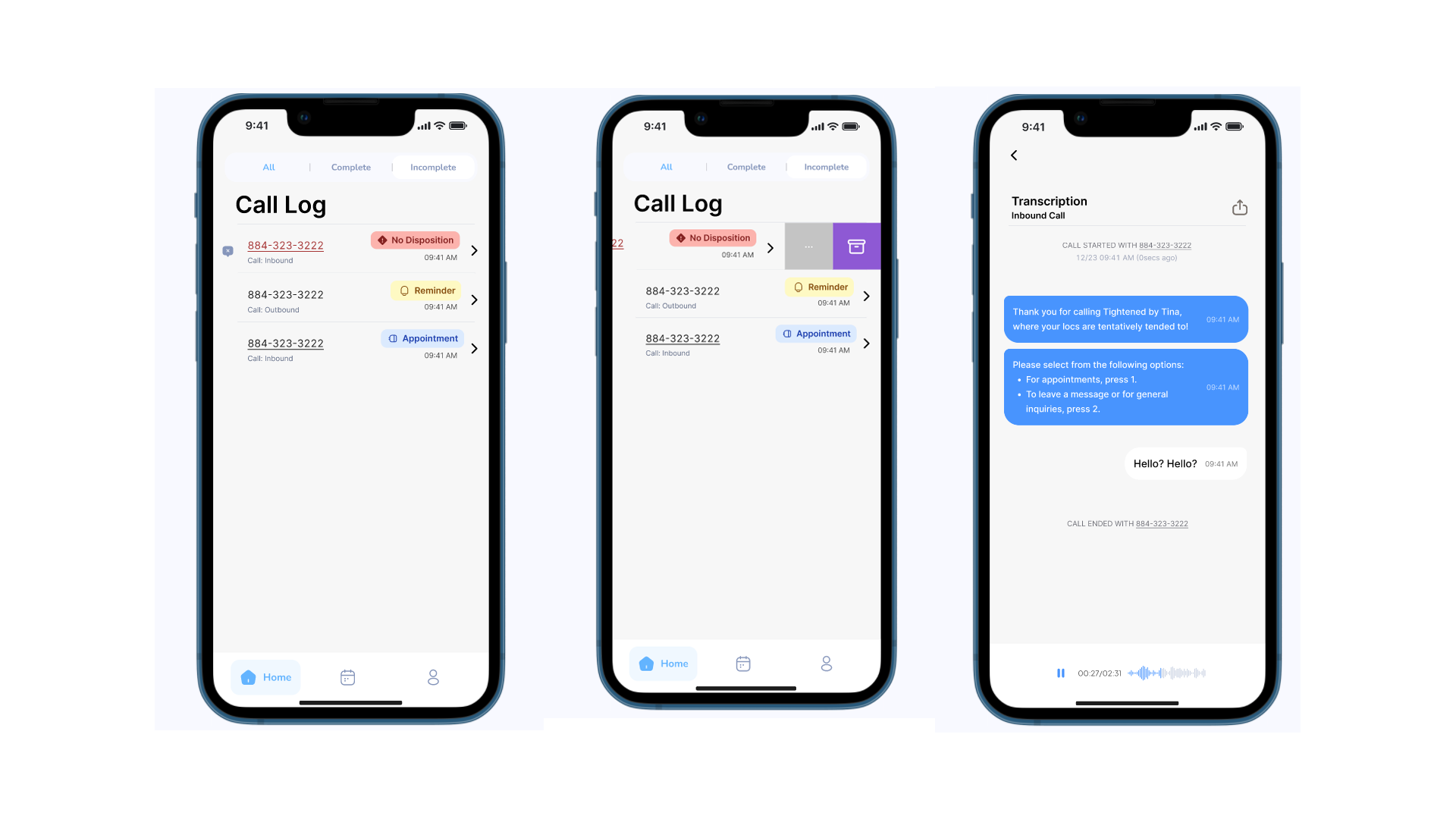
The final direction prioritized scannability and reduced decision friction through the introduction of high-contrast action chips, enabling faster appointment booking directly from transcripts.
Key Features: Designed for the Workflow
Scannable Intelligence
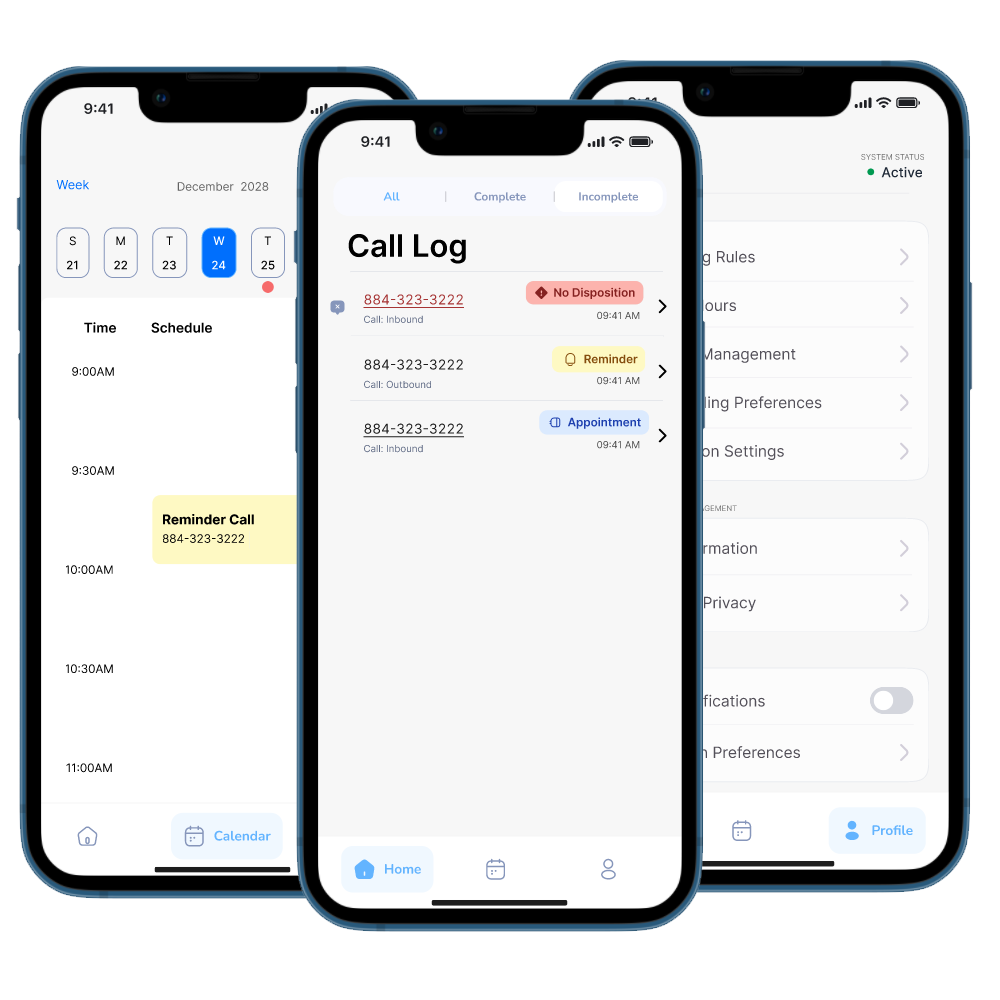
The dashboard prioritizes active calls with high-contrast transcripts, allowing business owners to quickly scan context without listening to audio. Quick actions enable archiving and follow-up decisions in seconds—ideal for use between client-facing tasks.
A Tailored "Brain"
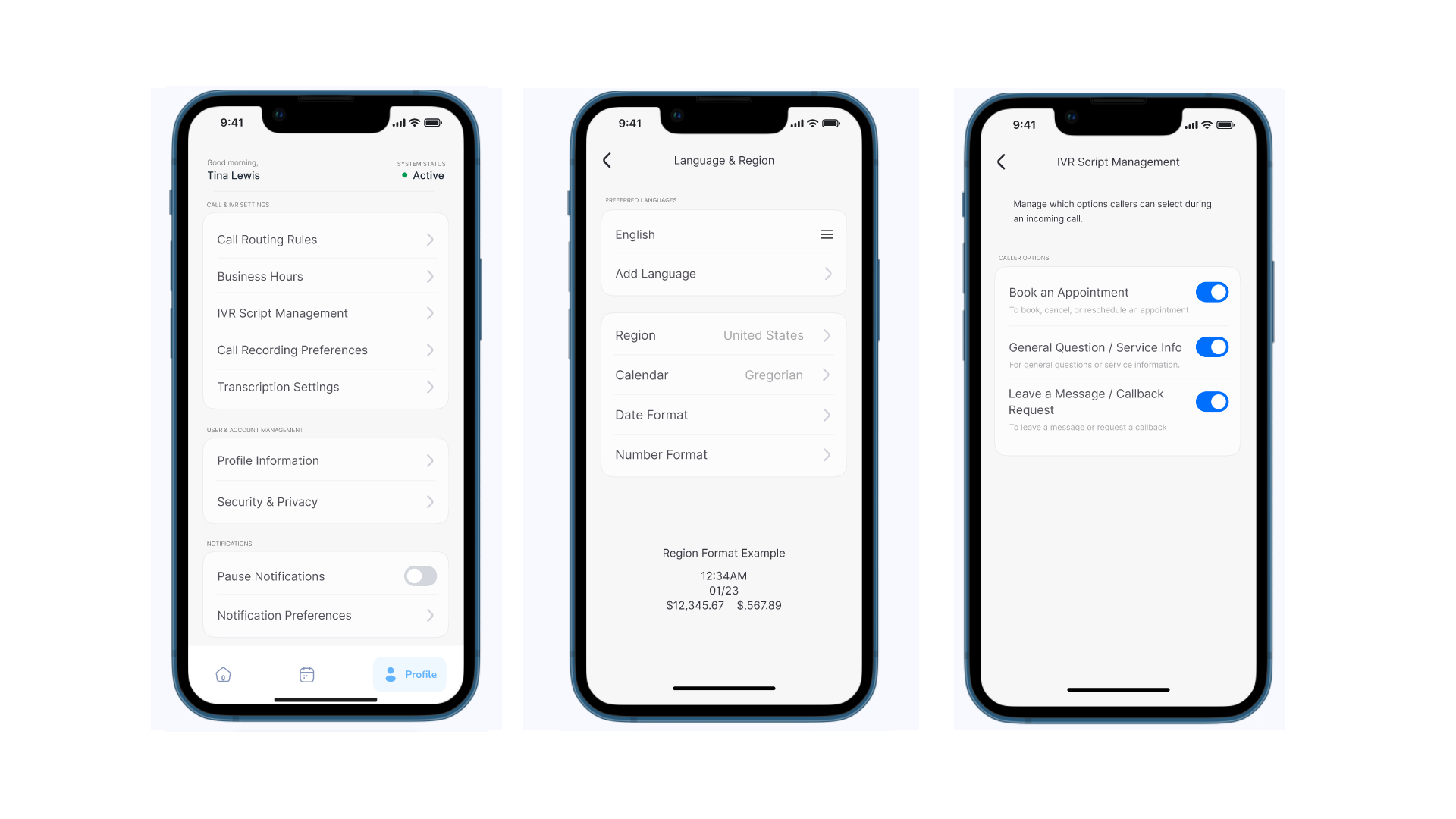
No two businesses are the same. Carbon’s IVR Script Management allows users to tailor how incoming calls are handled by enabling or disabling predefined call dispositions.
Instead of writing scripts or managing call logic, business owners simply choose which options callers can select—while Carbon automatically manages numbering, routing, and follow-up behind the scenes.
The Calendar Engine
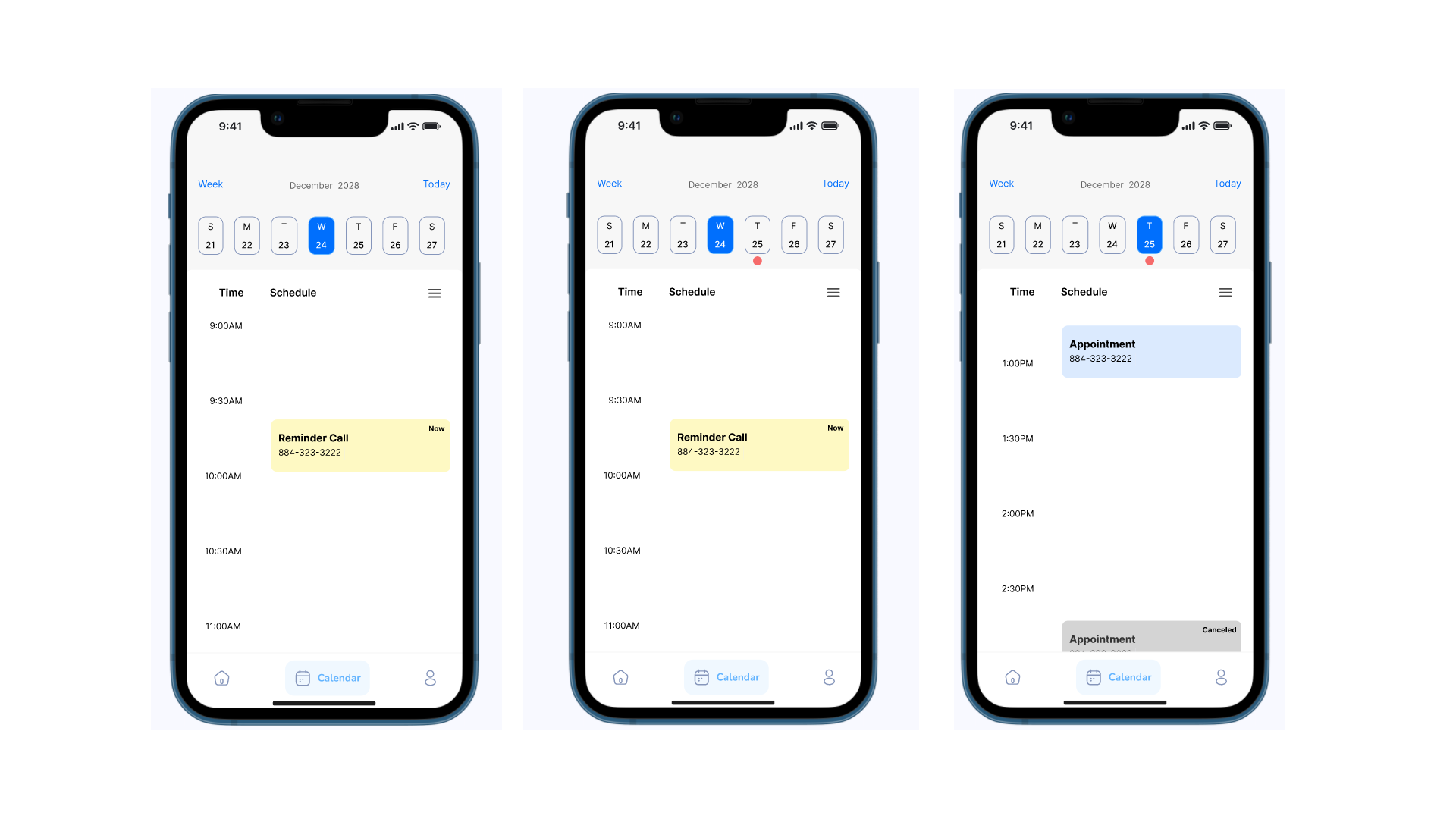
Carbon automatically updates the calendar based on IVR outcomes—logging appointments, reminders, cancellations, and reschedules without manual input. The result is a clean, glanceable view of the day that reflects what’s actually happening, not what was originally planned.
Visual Identity: The Carbon Design System
Foundation & Accessibility
Carbon’s design system is grounded in clarity, consistency, and accessibility. Key components—including call cards, transcript threads, and reminder blocks—were designed to be glanceable, allowing users to quickly understand the status of calls, dispositions, and upcoming actions. By standardizing these elements, the interface maintains a cohesive visual language across the app, ensuring that solo service providers can stay on top of tasks without cognitive overload or unnecessary friction.
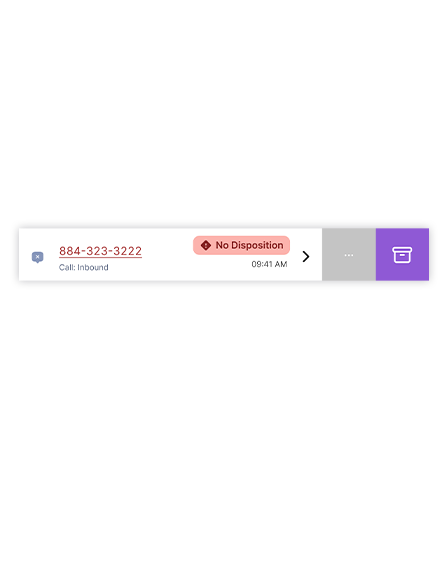

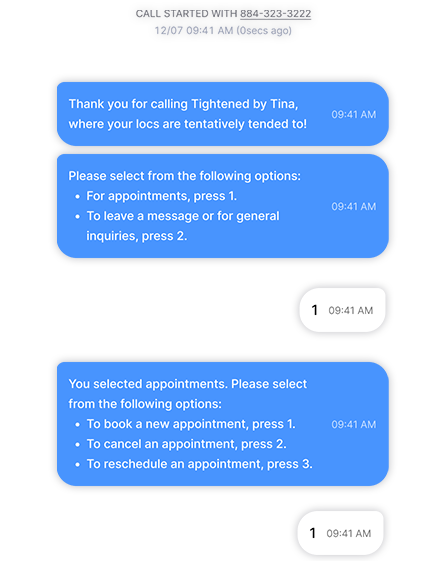
Carbon’s design system is built on modular components, including call cards, transcript threads, and reminder blocks. Each element was designed to be glanceable, allowing users to understand call status, disposition, and history within seconds.
Reflection: Final Thoughts
Carbon taught me that UX design is rarely about reaching a 'finished' destination. Instead, it’s about building a digital ecosystem. Throughout this process, I realized that every screen and component is a building block in an ever-evolving universe.
Moving forward, I don't see Carbon as a completed project, but as a growing concept. Each iteration—from refining the IVR logic to expanding the settings sub-frames—is an opportunity to further harmonize the relationship between the service provider and their digital assistant. This project reinforced my commitment to user-centricity, not just as a design phase, but as the constant North Star for a product that will continue to grow and adapt.
Next Steps: Expanding IVR voice options for global localization.
Integrating with third-party payment processors for "deposit-required" bookings.